

An organisation that keeps running despite disconnected systems is not necessarily efficient. It may simply have people doing the work its systems should do.
It is the third working day of the month, and the operations report is due.
The ERP shows one figure for output. The plant supervisor has another in a spreadsheet, because the ERP posts some transactions late. Sales has a third, assembled from messages sent through the week. Someone in finance spends most of two days comparing the three and phoning people to settle the differences.
The report goes out on time. Management sees a team that delivers.
This is an illustrative scenario, not an account of any specific company.
What management does not see is the work that made the report possible. Nobody did anything wrong. But the organisation's systems did not produce an agreed figure. People did.
This article is for the executive who sees a business that keeps running and wants to know how much of that comes from the systems, and how much from people compensating for them.
Running is not the same as working
A business can keep operating for years on human effort. Orders ship, patients are seen, reports arrive. From the outside, that looks like efficiency.
It may not be. Efficiency is about how much effort an outcome costs. When people repeatedly bridge gaps that systems and processes should have closed, the outcome is still delivered. The cost disappears into salaries, overtime and attention.

Researchers who study this behaviour call it a workaround. In a 2014 review in the Communications of the Association for Information Systems, Steven Alter drew on more than 300 articles from organisational, management, public administration and technology research. He defines a workaround as a goal-driven adaptation that overcomes, bypasses or reduces the impact of an obstacle, such as an exception, a constraint or an established practice. The situations he describes include cumbersome processes, missing information, malfunctioning technology and technology that does not fit the realities of daily work. ERP software, with its forced sequences of steps and inflexible rules, is a widely studied example.
Alter's review does not condemn workarounds. It records a wide range of views, from necessary and creative acts to hazards. It also describes effects that cut both ways: work continues despite obstacles, and workarounds can create inefficiencies and errors or hide problems that should be corrected directly. It is a review of the literature. It does not measure how common workarounds are or what they cost.
How manual intervention becomes normal
Most workarounds begin as sensible responses. A report is late, so someone builds a spreadsheet. A system cannot show status, so someone sends a message. The fix works. Nobody removes it.
Alter notes that workarounds meant as quick fixes often become long lived. A factory study from the 1990s that he cites shows how. Early integration problems led engineers to install a temporary manual workaround. Operators came to depend on it and resisted its removal. The new machine's high-precision capability was never fully used.

The pattern is easy to recognise. A temporary step becomes a procedure. The procedure becomes part of someone's job. Eventually the organisation forgets that a system was supposed to do this work.
Human middleware: where it appears
When people carry information between systems that cannot share it themselves, they act as human middleware. The pattern appears across sectors. These are illustrative examples of the pattern, not findings from a survey.
- Manufacturing. Supervisors reconcile production records by hand because the systems do not give one consistent picture of what was made.
- Healthcare. Staff phone other departments to find out the status of a patient, a laboratory result or a diagnostic request.
- Logistics. Coordinators track vehicle movements and delivery updates across platforms that do not talk to each other.
- Agriculture. Managers consolidate production, inventory and distribution figures from separate records.
- Government. Officers move information between departments by hand because administrative systems do not communicate.
- Corporate enterprises. Finance, HR and operations teams keep parallel spreadsheets because their applications do not support shared workflows.
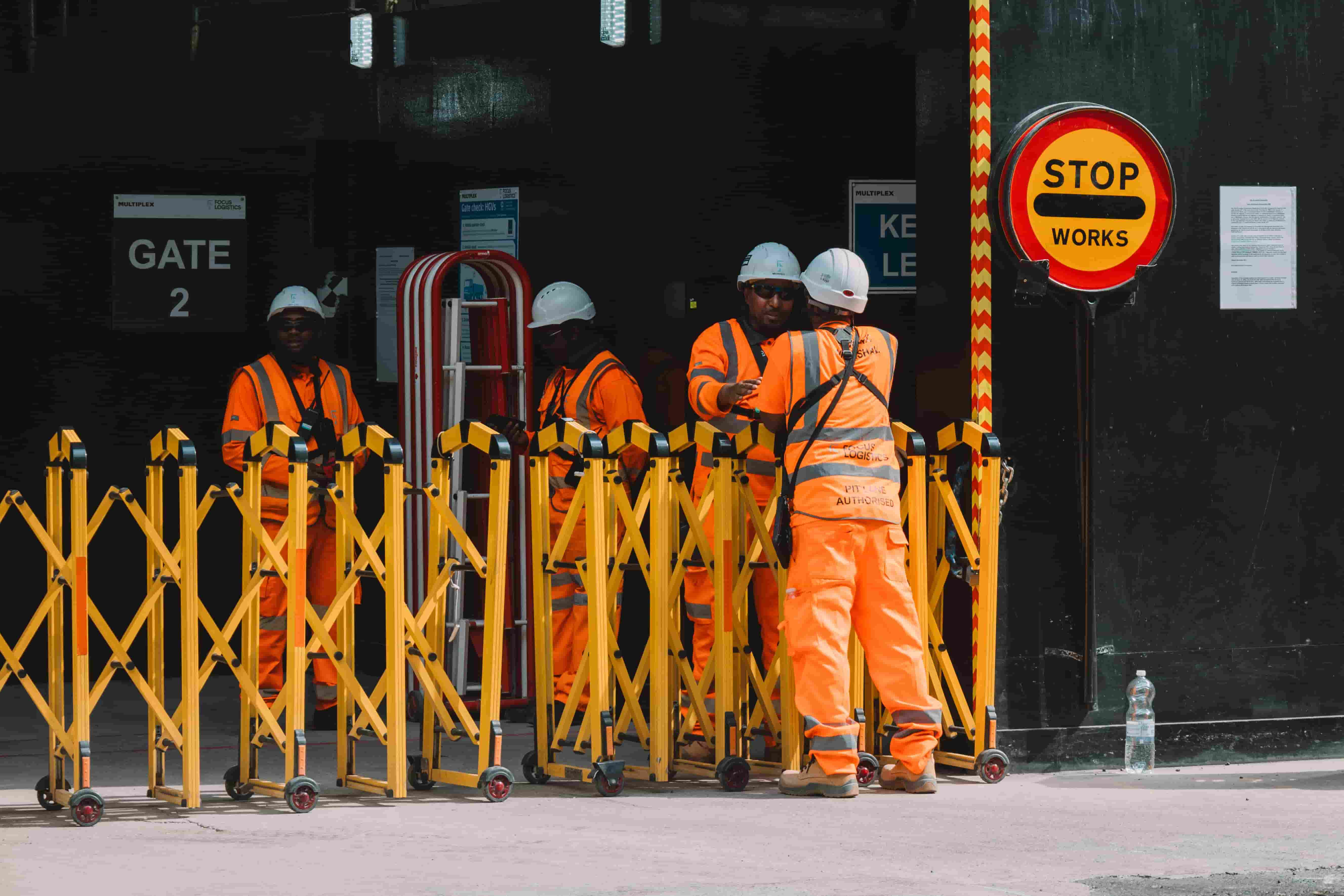
The sector changes. The pattern does not. In each case a person carries what a system should carry.
The hidden dependency
When continuity depends on people bridging gaps, the business depends on those people in a way its structure does not show. We looked at this from the employee's side in Your Best Employees May Be Hiding Your Biggest Operational Problems.
The point here is structural. The weakness of the system has been moved onto individuals, where it is harder to see and harder to fix. It also connects to a theme we raised in Why Connecting Systems Is Not the Same as Integrating Operations: connected systems that still need a person to carry information between them are telling you exactly where the integration stops.
The management blind spot
Why does a business with these gaps still look healthy? Because reports describe outcomes, not effort. The report arrives on time. The shipment leaves. The patient is discharged. Nothing in those numbers shows how many calls, copied entries and manual checks sat behind them.

Three things tend to stay hidden. The first is time. Coordination work rarely appears as a cost line. The second is data quality. The literature Alter reviews notes that private spreadsheets kept outside corporate systems often hold logic and data that differ from official records. The third is latent problems. Workarounds can mask errors and inefficiencies that belong at the source.
Over time the business learns the wrong lesson. It concludes that the operation is efficient because it keeps delivering. It stops asking whether the delivery is cheap, reliable or repeatable.
Judgement or coordination?
None of this means every manual step should disappear. Businesses need human judgement. The aim is to separate work that needs a person from work that only needs a person because the systems are incomplete.
A practical test is whether the person is deciding or carrying.

- Deciding. The person weighs context, uses discretion and could reasonably reach different answers. Keep it, and support it with better information.
- Handling an exception. The situation falls outside the process. Keep the person. Learn from the pattern, because recurring exceptions are a design signal.
- Carrying. The person moves, copies, confirms or chases information that already exists in a system. This is where engineering should intervene.
Alter observes that workarounds can be a starting point for planned improvement. That is the useful way to read them. Each one marks a place where the system or the process did not fit the work.
The engineering response
Removing the workaround is rarely the first step. The sequence we follow is:
- Observe how the work actually happens, including the steps no procedure mentions.
- Find where people are compensating and establish why the system or process fails them.
- Redesign the process where the workflow itself is the problem. As we argued in Why Operational Visibility Must Come Before Automation, automating a poor process only makes it faster.
- Integrate the systems where the gap is in how they share identity, status and rules.
- Make operational information visible and reliable so people can see status without asking for it.
- Automate the steps that are well understood and repetitive.

The order matters, because each step depends on understanding the one before it. Not every operation needs all six. Sometimes a process change removes the need for the workaround. Sometimes the right answer is better information, with no new technology at all.
Five questions to ask about your own operation
- Where is the same information entered or copied more than once?
- Which reports are produced by reconciling several sources by hand?
- Which teams keep their own records because they do not trust the central system?
- Which decisions are made by phone or message because the system cannot show status?
- Is the time spent on coordination measured anywhere, or does it vanish into normal working hours?
If the answers are hard to find, that is informative in itself. The work is happening where your systems cannot see it.
A business that runs is not necessarily a business that works
An organisation's ability to keep operating despite disconnected systems and poorly designed workflows should not be mistaken for efficiency. When people repeatedly bridge gaps that technology and process should have closed, the engineering problem has not been solved. It has been moved onto people.
That is where TENNXT starts. We observe the operation, find where people are compensating, then decide case by case whether the answer is a better process, a proper integration, more reliable information or automation. Sometimes the answer is none of these. The workaround should stay.
Where in your organisation are people carrying information that a system should already hold?
Where are your people carrying the system?
A Tennxt engineer walks one process with your team and delivers a written findings report. No cost. No sales presentation.
Further reading:
- Your Best Employees May Be Hiding Your Biggest Operational Problems
- Why Connecting Systems Is Not the Same as Integrating Operations
- Why Operational Visibility Must Come Before Automation
- Your Warehouse Is Automated. So Why Are You Still Flying Blind?
- The Operational Mistakes That Keep Complex Businesses Running Below Their Potential
Sources:
- Alter, S. (2014), "Theory of Workarounds", Communications of the Association for Information Systems, 34(1), Article 55, pp. 1041-1066 (publisher page)
Alter's article is a review of more than 300 publications and a theory of how and why workarounds occur. It does not measure how common workarounds are or what they cost. The scenario and the sector examples above are illustrative.
Joshua Otomo is Founder and Chief Executive Officer of Tennext Core Ltd (TENNXT), an enterprise systems integrator focused on intelligent software, industrial automation and operational analytics. He writes about how large organisations get technology projects right and, more often, why they don't.
Contact: hello@tennxt.com · tennxt.com


